Hurricane Lowell left communities without power for days. Here is what that changed about the plan.

See the lessons →
Kauai Resilient Communications Network

Grid down. Internet down. Kauaʻi still communicates.

Cell service along the North Shore is already thin on an ordinary day. After Hurricane Lowell, power and phones stayed down for days. This corridor is the powered sites and the wireless backhaul those two problems share.

1 · The problem

When the grid and the internet fail together, Kauaʻi goes quiet

Grid down. Internet down. Kauaʻi still communicates.

Phones, fiber, and many radios plug into the same utility power. Hurricane Lowell showed what that means: days without electricity, and communities that still needed to know which roads were open, where water and food were, and how to reach a neighbor. KauaiInternet is the local layer that keeps that message moving.

Everyday cell service on this coast is already a reason to build. In May 2024, Kauaʻi Fire and Emergency Management told the County Council that service in Hāʻena and at Keʻē frequently drops, or is absent, when someone needs to call for help. The Associated Press reported lifeguards at Keʻē sometimes walk the beach looking for a signal.

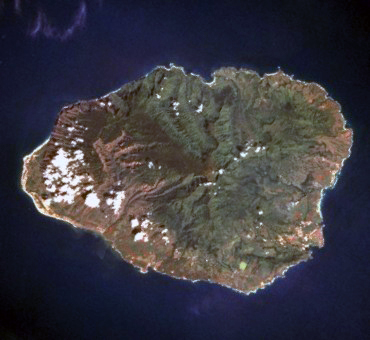
Satellite view of Kauaʻi, with the mountainous interior and the coastal towns around the edge
The first plan is the North Shore corridor, not a signal over the whole island.

2 · What Hurricane Lowell taught us

Prolonged outages, and nowhere reliable to hear the news

Lowell hit Kauaʻi in early September 2026. These points are from public county, utility, and news reports. KauaiInternet does not operate 911, county radio, or the broadcast stations named here.

  1. 1

    Sept 14

    Peak outage

    About 33,000 customers out. Roughly 6,900 still out that morning.

  2. 2

    Sept 21

    Fourteen days later

    KIUC reported restoration at 98 percent.

  3. 3

    Sept 22

    North Shore still dark

    About 500 members in Wainiha and Hāʻena were still without power.

The grid stayed down for days, and longer on the North Shore

The County of Kauaʻi reported on September 14, 2026 that peak outages hit about 33,000 customers, with roughly 6,900 still out that morning. KIUC reported on September 21 that restoration had reached 98% fourteen days after Hurricane Lowell. On September 22, about 500 members in Wainiha and Hāʻena were still without power.

People could not count on radio or internet alerts

KKCR stayed on the air through the night of the storm, then lost internet and was running on generator fuel. Designated emergency stations ran into power problems, so large parts of the island could not hear which roads were open, where water and food were, or which facilities were operating.

The need was local status, not a faster internet plan

Neighbors needed a way to learn road closures, water, aid, and whether a clinic or shelter was open, and a way to tell someone nearby they were all right. Official alerts still matter. Call 911 when you can, and sign up for county Everbridge alerts.

3 · What we are building

A North Shore corridor that stays up without the grid

The first build is an operating resilience corridor for Hāʻena, Hanalei, Princeville, Kīlauea. It is a place where a short message and a status note still work, not a radio range test.

Where the plan would serve

The first shaded towns are the North Shore pilot. Whole island turns on the other places people live and adds those towns to the cost.

North Shore pilot onlyNorth Shore first

  • Community a pilot hub is meant to serveTown this first build would serve
  • Proposed link between hubsLink from one community site to the next
  • Proposed hub, site not surveyedCommunity site, location not chosen yet

Shaded areas are the towns the first build is for. Turn on Whole island to see the same pattern in the other places people live. The line between hubs is point-to-point, not a blanket of signal. This is not a measured coverage prediction, and no site is permitted yet.The line is the link from one community site to the next, not a blanket of phone signal. The color is the town, not a measured coverage map, and no site has a permit yet.

The first build is four North Shore towns. The same idea follows the coast through the east side, Līhuʻe, the south shore, and the west end. Turn on Whole island to read that part of the plan.

72

KauaiInternet 72

Critical network nodes operate for at least 72 hours without utility power, on solar and battery.

Lowell lasted longer than 72 hours in Hāʻena, Wainiha, and Kōkeʻe. This standard is the minimum for every critical node, so the first three days are covered while utility crews are still getting in.

Power at each hub

Solar and batteries carry the 72 hours. The generator and the spare pack are there when that is not enough.

  1. 3.2 kW solar

    Eight panels refill the bank on a clear day.

  2. Batteries online

    Seven at each town hub, about 29 kWh usable, so the phone radio lasts 72 hours at full draw. The ridge relay stays at four.

  3. One hot spare

    Pull a weak pack and bolt this one in. The packs still online stay on.

  4. Propane generator

    Refills the bank when the storm keeps the sun away.

Three parts, in this order

Resilience hubs, then the link between them, then a short-range mesh.

  1. 1

    Resilience hub

    A status note for roads, water, and aid, plus a place to charge a phone.

  2. 2

    Wireless backbone

    A radio link from one hub to the next. On an ordinary day it is backhaul. In an outage the note still travels the corridor.

  3. 3

    Emergency mesh

    A short message from a handheld near the hub when phones are down.

The same build on an ordinary day

The airFiber link connects the hubs. It does not put a signal on a phone. Each town hub gets one BLiNQ phone radio covering about 180° of that town, so a phone that joins this network can use it there on an ordinary day. The backbone is what carries that traffic off the valley.

After: towns the new phone radios are aimed atAfter: the four towns that would get a phone signal

  • Town a Band 48 radio is aimed atA town that would get a signal
  • Proposed hub, site not surveyedCommunity site, location not chosen yet

Teal marks the four towns. Each town hub gets one BLiNQ radio covering about 180° of that town. A phone shows this network after it installs the profile. The shade is the town, not a measured signal contour, and it is not Verizon, AT&T, or T-Mobile.Teal marks the four towns. A phone uses this signal after it is set up for this network. The color is the town, not a measured footprint, and it is not Verizon, AT&T, or T-Mobile.

After: the four North Shore towns.The four towns. To build $375,829. Each year $80,419.

Powered site

Ordinary day

A radio here stays on when the utility blinks, so everyday service on the site does not wait for KIUC.

Power or internet down

Solar and battery cover 72 hours. The generator refills after that.

Town-to-town backbone

Ordinary day

This is backhaul. A home internet link, or a carrier small cell on the same site, uses it to reach the rest of the internet.

Power or internet down

The status note and short messages still move from Hāʻena to Kīlauea.

Internet at the hub

Ordinary day

Starlink at two hubs, and Wi-Fi in the building, so a phone there can load a page or place a Wi-Fi call every day.

Power or internet down

If the path off the island dies, the cached note at the hub remains.

Band 48 phone radios

Ordinary day

One BLiNQ FW-300i at each town hub, covering about 180° of that town. A phone that installs this profile can call and use data there on an ordinary day.

Power or internet down

The radio draws up to 180 watts. Seven batteries at the town hub keep that maximum inside the 72 hours.

Still a later step

Carrier bars

A Verizon, AT&T, or T-Mobile phone does not join this network by itself. Their bars still need their own radio, or an agreement to share the site. This budget buys the Band 48 radios, not theirs.

Still a later step

A call from the house

A house the town radio can see uses this network once the phone has the profile. A house behind a ridge is a gap-fill pocket, not a radio on every home. A subscriber radio for each house is still not in the pilot price.

Still a later step

The handheld mesh

The mesh carries a short message when a phone has no service. Putting bars on a phone is a different radio.

How the build grows

North Shore first. East side next. The rest of the island after that.

How the build grows across KauaʻiKauaʻi’s coastline. The first build follows the North Shore from Hāʻena through Hanalei and Princeville to Kīlauea. Anahola and Kapaʻa are the next stretch. Līhuʻe, Poʻipū, and Waimea come later. This is not a signal survey.HāʻenaHanaleiPrincevilleKīlaueaAnaholaKapaʻaLīhuʻePoʻipūWaimeaKauaʻi · towns in the plan, not a signal survey
Now: Hāʻena, Hanalei, Princeville, KīlaueaNext: Anahola and KapaʻaLater: Līhuʻe, the south shore, and the west side
  1. Stage 1

    North Shore Pilot

    Hāʻena, Hanalei, Princeville, and Kīlauea. The first corridor that meets KauaiInternet 72.

  2. Stage 2

    North/East Expansion

    Extend the same pattern toward Anahola and Kapaʻa after the pilot corridor is working. Whole island adds these towns to the cost.

  3. Stage 3

    Island Backbone

    The same hub pattern in the towns where people live: Wailua, Līhuʻe, Kōloa, Kalaheo, Hanapēpē, Waimea, and Kekaha. Whole island adds these towns to the cost. Not the empty interior.

4 · When everything goes down

What still works in each kind of failure

This is the planned behavior of the design. It is not a claim that nodes are on the air today. “All of these” means the grid, fiber, cellular, and satellite are unavailable at the same time.

These can all be down

  • Utility power
  • Fiber
  • Cellular
  • Satellite

These are designed to stay up for 72 hours

  • Short mesh messages
  • Status note at the hub
  • Link from hub to hub
ServiceGrid downFiber downCellular downSatellite downAll of these
Emergency mesh messagesStays upStays upStays upStays upStays up for 72 hours
Cached hub statusStays upStays upStays upStays upStays up for 72 hours
Links between hubsStays upStays upStays upStays upStays up for 72 hours
Off-island internetOnly if hub solar runs a pathCellular or satelliteFiber or satelliteFiber or cellularDown
Cellular alerts and phone serviceDown when towers lose powerMay remainDownMay remainDown

Mesh, hub status, and hub-to-hub links stay up only where the node meets KauaiInternet 72. Off-island internet is a bonus path, not the service.

5 · What it costs to start

What it costs if we buy everything new

This version assumes no contributed radios, switches, batteries, or antennas. The shelf inventory is a separate asset and is not subtracted here. Four town hubs (Hāʻena, Hanalei, Princeville, Kīlauea) plus one ridge relay, because the North Shore usually needs an extra hop. A survey can drop the relay. Each town hub gets one BLiNQ FW-300i phone radio, covering about 180° of that town. Smaller solar nodes for the pockets that face misses are a later phase and are not in this price. A Verizon, AT&T, or T-Mobile radio, and a radio on every house, are still later purchases. Turn on Gap fill to add the eight pockets, $527,087 to build and $106,723 a year. Turn on Whole island to add the other coastal towns, $1,086,901 to build and $177,581 a year.

Capital cost to build

$375,829

New equipment, solar and batteries, generators, freight, labor, 15% overhead, Kauaʻi GET, and an 8% materials contingency.

Annual operating cost

$80,419

Includes an on-call roster, one outage week, quarterly maintenance, admin, insurance, Starlink service, generator exercise fuel, a spares reserve, and site access if the roofs are not donated.

Where the build money goes

Ubiquiti airFiber 5XHD on 5 GHz for the backbone, with 30 dBi dishes. It stays up in rain when a clean channel is available, and it is the radio a working fixed-wireless builder would still use for most links. Ubiquiti’s newer Wave MLO5 can bond more 5 GHz spectrum for multi-gigabit speed and also does not fade in rain, but this pilot does not need that speed and wide channels are harder to find. Phones do not join that backbone. Each town hub gets one BLiNQ FW-300i on Band 48, the shared CBRS band, covering about 180° of that town, so a phone that installs this network’s profile has LTE there. Town hubs get seven EG4 5.12 kWh batteries online so the phone radio stays inside 72 hours at its published maximum draw. The ridge relay stays at four. Every site keeps a hot spare, 3.2 kW of solar, and a propane generator. Starlink Mini is the off-island path at two hubs. Messages use current RAK WisMesh gateways.

  • Radios, mesh, and compute$58,919
  • Solar, batteries, and generators$93,849
  • Shipping to Kauaʻi$18,000
  • Drone survey, lift, and permits$27,521
  • Labor$100,640
  • Overhead and margin$44,839
  • Kauaʻi GET$16,198
  • Materials contingency$15,863

Radios, mesh, and compute$58,919

  • Ubiquiti airFiber 5XHD radiosListed price

    8 radios, two per hop, for 4 links. Ubiquiti’s store lists the AF-5XHD at $429. 5 GHz keeps working in heavy rain. 60 GHz does not.

    Ubiquiti store, airFiber 5XHD

    8 × $429$3,432

  • Spare airFiber radiosListed price

    Two spares on the shelf the day the corridor is built, so a failed radio is not a reorder from the mainland.

    Ubiquiti store, airFiber 5XHD

    2 × $429$858

  • Ubiquiti RocketDish 30 dBiListed price

    One RD-5G30 per radio. A distributor lists it at $182.52, rounded here.

    NewTech Industries, RD-5G30

    8 × $183$1,464

  • airFiber dish mount kitsAllowance

    The RocketDish needs an airFiber X mount to hold a 5XHD. Allowance until that SKU is on the order.

    8 × $99$792

  • RAK WisMesh Ethernet gatewaysListed price

    One current Meshtastic gateway at each powered site. Rokland lists the PoE build at $114.97.

    Rokland, WisMesh Ethernet gateway

    5 × $115$575

  • Community mesh radiosAllowance

    20 current WisMesh-class handhelds, about five per town, for the short-message layer.

    20 × $65$1,300

  • Site routersAllowance

    One current MikroTik RB5009-class router at each powered site.

    5 × $250$1,250

  • Hub computersAllowance

    Four fanless edge PCs, one per town hub, to hold the cached status note. The relay does not get one.

    4 × $650$2,600

  • Outdoor PoE switchesAllowance

    One small PoE switch at each powered site. The phone radio runs on the 48 volt battery bus, not on this switch.

    5 × $200$1,000

  • BLiNQ FW-300i phone radiosListed price

    One at each town hub, none at the ridge relay. BLiNQ’s shop lists the Band 48 model at $8,000, with the mount and a 48 volt jumper. It is one box with about 180° of coverage, so it faces the town instead of three separate sectors. BLiNQ lists up to 53 dBm EIRP per sector; a Category B grant is capped at 47 dBm per 10 MHz, and the grant sets the power. Maximum draw is 180 watts, off the 48 volt battery bus. The map still shades the town, not a measured contour. A phone uses this after it installs a profile. It stays a Band 48 network, not Verizon, AT&T, or T-Mobile.

    BLiNQ shop, FW-300i Band 48

    4 × $8,000$32,000

  • Spare phone radioListed price

    One spare FW-300i, so a failed town radio is a swap and not a mainland reorder.

    BLiNQ shop, FW-300i Band 48

    1 × $8,000$8,000

  • Embedded core licensesListed price

    BLiNQ’s embedded EPC license is $750 and runs inside one base station, so the town does not need a separate core server. Five licenses: four live radios and the spare.

    BLiNQ shop, embedded EPC license

    5 × $750$3,750

  • First 100 phone profilesAllowance

    SIM or eSIM cards so the first neighbors can join the Band 48 network. The core license is a separate line. No single catalog price covers the card pack. Allowance, not a carrier plan.

    1 × $1,500$1,500

  • Starlink Mini kitsListed price

    Two kits, at Hanalei and Princeville. Starlink lists the Mini from $199. The dish stays inside the power budget. Community outlets are limited before the dish or the radios.

    Starlink Mini

    2 × $199$398

Solar, batteries, and generators$93,849

  • EG4 48V 100Ah LiFePO4 batteriesListed price

    Four online at the ridge relay, seven online at each town hub. Seven packs are 35.84 kWh nameplate, about 29 kWh usable at 80% depth of discharge. The phone radio’s published maximum is 180 watts, so a town hub is about 380 watts and about 27 kWh over 72 hours. That fits the seven-pack bank. The ridge relay stays near 200 watts and keeps four packs.

    SanTan Solar, EG4 LifePower4 V2

    32 × $1,471$47,072

  • Hot-swap spare batteriesListed price

    One extra 5.12 kWh pack at each site, stored charged. A weak online pack can be unbolted and this spare bolted in while the others keep the hub up. At a town hub, six packs remain until the spare is in, about 25 kWh usable. At the ridge relay, three remain, about 12 kWh.

    SanTan Solar, EG4 LifePower4 V2

    5 × $1,471$7,355

  • Victron Lynx DistributorListed price

    One fused DC bus at the ridge relay, two at each town hub. Two distributors give eight fuse positions. Seven packs sit online, and the spare can take the eighth during a swap. Current Connected lists the M10 at $232.90.

    Current Connected, Lynx Distributor M10

    9 × $233$2,097

  • Battery fusesAllowance

    Four MEGA fuses plus a spare at each site. The Lynx ships without fuses.

    5 × $125$625

  • Victron MultiPlus-II 48/5000Listed price

    One 120V UL inverter/charger per site. 4,000 watts continuous and a 70 amp charger, so the hub can run a charging station and still take a generator. The charger is limited to about 2.5 kW so it stays inside the generator’s propane rating. Current Connected lists it at $1,458.60.

    Current Connected, MultiPlus-II 48/5000 120V

    5 × $1,459$7,295

  • Victron SmartSolar MPPT 250/70Listed price

    One charge controller per site. Eight 400W panels are about 57 amps while charging, inside the 70 amp limit. EXPLORIST.life lists it at $502.35.

    EXPLORIST.life, SmartSolar MPPT 250/70

    5 × $502$2,510

  • 400W solar modulesAllowance

    Eight modules per site, 3.2 kW. On a clear day that is on the order of 9–10 kWh, enough to run the hub and put charge back in the bank. After a storm the yield drops, which is why the generator is in the budget. Retail allowance.

    40 × $210$8,400

  • Dual-fuel inverter generatorsListed price

    One Champion 4500-watt inverter generator per site, model 201319, so no one has to haul a generator across the bridge during the storm. Propane is the storm fuel because it stores. Gasoline is the second fuel. SuperGen lists it at $959. Propane running output is about 3,150 watts.

    SuperGen, Champion 201319

    5 × $959$4,795

  • Propane cacheAllowance

    Four 20-pound tanks at each site, bought on Kauaʻi. One tank is about one full recharge of the online bank. Four tanks cover several cloudy days of top-ups. Tank plus the first fill.

    20 × $85$1,700

  • Racks, racking, generator inletAllowance

    Rack space for the online batteries, including seven packs at each town hub, a shelf for the spare, eight-panel racking, generator inlet, propane cage, surge protection, conduit, and grounding. Per-site allowance, not a quote.

    5 × $2,400$12,000

Shipping to Kauaʻi$18,000

  • Freight to KauaʻiAllowance

    About four tons once the battery racks, eight-panel arrays, and generators are included. Ocean freight to Nāwiliwili, then a smaller shuttle past the Hanalei bridge, which a full box truck may not cross. Propane tanks are bought on island and are not in this weight.

    1 × $18,000$18,000

Drone survey, lift, and permits$27,521

  • Survey drone kitListed price

    DJI Mavic 3 Enterprise with spare batteries and a zoom camera, bought rather than rented, so later roof and path checks use the same kit. UAV Coach lists a battery kit at $5,721.

    UAV Coach, Mavic 3 Enterprise battery kit

    1 × $5,721$5,721

  • Drone path surveyAllowance

    Four days with a Part 107 pilot to check line of sight on each hop and the spare ridge, including a weather hold. Day rate allowance, not an electrician hour.

    4 × $1,800$7,200

  • Boom liftAllowance

    Lift rental and delivery to the North Shore for roof mounts the drone cannot install.

    1 × $3,000$3,000

  • PermitsAllowance

    Electrical and solar permits for a 3.2 kW array and a generator at each site, the four phone-radio mounts, plus a coastal Special Management Area allowance where Hāʻena or Hanalei sites fall inside it.

    1 × $10,000$10,000

  • CBRS installer registrationAllowance

    A certified professional installer has to register each Category B radio with a spectrum system before it can transmit. Allowance for four radios. Not a vendor quote.

    1 × $1,600$1,600

Labor$100,640

  • Install and alignmentAllowance

    400 hours at $185. Two people for five days at each of five sites: battery rack, eight-panel array, generator inlet, radio alignment, and the drive past Princeville.

    400 × $185$74,000

  • Phone-radio installAllowance

    64 hours at $185. Two people for one day at each town hub to mount the FW-300i, aim its 180° face at the town, land it on the 48 volt bus, and confirm a handset joins.

    64 × $185$11,840

  • RF and electrical designAllowance

    80 hours at $185 for the link budget, the Band 48 sector aim, the one-line with the generator inlet and hot-swap bus, and permit drawings.

    80 × $185$14,800

Each year$80,419

  • Starlink Roam 300GBListed price

    Two dishes at $80 a month. Starlink’s published Roam 300GB plan.

    Starlink service plans

    $1,920

  • Spectrum access systemListed price

    Key Bridge Wireless lists $500 a month, and that base fee includes the first 200 radios. Four phone radios fit inside it. Google is not taking new SAS customers. The radios cannot legally transmit on Band 48 without a grant.

    Key Bridge Wireless, June 16, 2026

    $6,000

  • Maintenance laborAllowance

    Four quarterly service visits, 48 hours at the $185 bill rate. Storm response is the on-call roster and the outage week below, not this line.

    $8,880

  • Site accessAllowance

    $200 a month at five sites if the roof or yard is not donated. Drop this line if hosts give the location.

    $12,000

  • Equipment insuranceAllowance

    Inland-marine style allowance for the installed gear, including the battery racks and generators. Not a broker quote.

    $3,600

  • Admin and bookkeepingAllowance

    About four hours a month to pay bills and track spares. Updating the status note during an outage is the outage-week line.

    $4,800

  • On-call rosterAllowance

    Two local people, primary and backup, alternating weeks, so someone can reach the North Shore. $60 a day for the person carrying the phone, 365 days. That is availability, not the repair rate. They answer, start a generator, swap a battery, and call the backup if they cannot get there.

    $21,900

  • Outage operationsAllowance

    One week of active response in the year: two people, eight hours a day, 80 hours at the $185 bill rate. They check each site, run the generator if the array is down, swap a pack if one fails, and keep the cached status note current. A longer outage adds hours beyond this allowance.

    $14,800

  • Generator exercise fuelAllowance

    A short monthly run at each site so the propane generator starts when the storm actually comes. Allowance for fuel, not a delivery contract.

    $900

  • Spares reserveAllowance

    Annual set-aside toward a replacement radio, a battery, or a generator hose. The batteries themselves are warrantied for about 10 years.

    $2,000

  • Kauaʻi GET

    $3,619

Prices checked October 2026. Listed lines are the published price rounded to the dollar. Allowances are not vendor quotes. Overhead is 15% of equipment, power, freight, and labor. Kauaʻi general excise tax is 4.5% charged on the tax itself (about 4.71%). The materials contingency is $15,863. Install labor is priced at $185 an hour. That is a Kauaʻi contractor bill rate for a licensed electrician and a helper, above the roughly $47 journey-worker wage in local job postings. It is not the $89.71 prevailing-wage total, which is a wage-plus-fringe figure for covered public work, not a bill rate. The earlier $150 rate did not cover a four-day site or the North Shore shuttle. The backbone is unlicensed 5 GHz, so it does not depend on a 6 GHz frequency coordinator.
Demonstration, not a live network

Simulated

The figures below are sample numbers for a planning dashboard. They are not coverage on Kauaʻi, and no nodes are on the air.

Open the sample dashboard →

Sample figures only · 3/5 Internet gateways · 7/9 Backbone nodes · 16/18 LoRa relays

Explore Your Community

See how resilience, connectivity, emergency readiness, and future community projects may relate to your location.

Network Map

Proposed

Infrastructure planning map

Teal areas are the North Shore communities the pilot is meant to serve. The gold line is the proposed link between hubs. All locations are approximate until field surveys and permissions are complete. This is not a measured signal map.

FiberMicrowaveFixed WirelessWi-FiLoRaRadioSatelliteInternet BackhaulReticulum (logical)
Loading network map…

Route visualization

Simulated

Princeville → Kapaʻa — educational simulation only, not live routing.

Princeville→Kīlauea / Crater Hill→Anahola→Kapaʻa Pilot Endpoint

On the shelf

Gear we have, and are not counting

This stock is real, and it is older than the radios in the pilot budget. The cost section buys the corridor new. None of these units are subtracted from that budget, and none of them are deployed.

397

Total units

38

Unique SKUs

8

Categories

What the gear enables

Wireless links

Point-to-point radios and sector antennas connect ridge relays to coastal hubs — creating paths that don't depend on a single fiber route.

Backhaul radios, antennas, routing

Community Wi-Fi

Access points at schools, community centers, and assembly points give residents a connection when home internet goes dark.

Access points, switching, power

Backup internet

Satellite uplink kits maintain a failover path when submarine fiber or primary ISP links are disrupted during storms.

Starlink kits, routing failover

Edge compute

Local servers cache critical data, run DNS, and relay emergency alerts — keeping island services alive when upstream is degraded.

Edge servers, switching, rack power

Power resilience

UPS, batteries, and solar-ready power keep nodes running through multi-hour or multi-day grid outages.

Batteries, PDU, UPS, rack infrastructure

Pilot framing: Inventory is grouped below by network role. Each category explains how the gear could support a resilience pilot — not a finished island network. Additional sites, funding, fiber paths, and operational capacity are still required.

Routing & Switching

80 units · 12 SKUs

Core and access-layer switches, routers, and patch infrastructure for site interconnect.

Possible pilot role

Enough switching to wire 2–3 pilot sites and a small edge aggregation point — not island-wide core capacity.

Use cases on Kauai

  • Pilot site aggregation — Wire a small edge closet or rack at a community anchor or data-center-edge candidate site.

Items in stock

Copper Switch RB5009

MikroTik

×13

MikroTik Outdoor Copper Switches (Used)

MikroTik

×20

MikroTik Network Switch

MikroTik

×9

MikroTik Router

MikroTik

×4

MikroTik Cloud Switch

MikroTik

×9

MikroTik Cloud Switch Router

MikroTik

×2

Edge Router

×3

MikroTik SFP Switch

MikroTik

×3

USW Pro Max

Ubiquiti

×4

Ubiquiti Pro Max PoE Switch

Ubiquiti

×2

Cisco 9300 Nexus

Cisco

×2

Nano Switch

Ubiquiti

×9

Wireless Backhaul

89 units · 3 SKUs

Point-to-point and high-capacity wireless links between ridge relays and hub sites.

Possible pilot role

Strong backhaul stock for linking a handful of ridge and coastal nodes in a pilot corridor.

Use cases on Kauai

  • Ridge-to-coast backhaul — Link one ridge relay to one hub in a pilot corridor — line-of-sight surveys required.

Items in stock

NanoBeam 5AC

Ubiquiti

×85

AirFiber 60XR UISP

Ubiquiti

×2

Tachyon TNA 302

Tachyon

×2

Access Points / Radios

67 units · 7 SKUs

LTE, Wi-Fi, and fixed wireless radios for last-mile and community access.

Possible pilot role

Radios to serve pilot coverage zones — additional licensing, backhaul, and sites still needed beyond inventory.

Use cases on Kauai

  • Fixed wireless access — Serve a limited subscriber pilot — not a replacement for island-wide ISP coverage.
  • Community Wi-Fi zone — Cover a single public Wi-Fi zone; backhaul and power must be provisioned separately.
  • Ridge-to-coast backhaul — Link one ridge relay to one hub in a pilot corridor — line-of-sight surveys required.

Items in stock

Baicell Nova 430i

Baicell

×12

Window Units Baicell

Baicell

×18

Rocket 5AC AP

Ubiquiti

×7

Baicell NR 11

Baicell

×7

Wave Nano

×7

Wave AP

×14

Baicell 846

Baicell

×2

Antennas

86 units · 4 SKUs

Sector, panel, and mounting hardware for relay and access deployments.

Possible pilot role

Mounting and antenna stock to support multiple relay builds; site surveys still required per location.

Use cases on Kauai

  • Relay antenna deployment — Hardware ready for several mounts; structural and permit review still needed per site.

Items in stock

KPP Dual-Band 8-Port Antenna

×41

NetPoint Antenna

×4

J Mount

×32

Long J Mount

×9

Power & Rack Infrastructure

29 units · 7 SKUs

PDUs, UPS, injectors, patch panels, and rack power for sheltered deployments.

Possible pilot role

Rack and power basics for a few sheltered nodes — outdoor power design still needed per site.

Use cases on Kauai

  • Sheltered node power — Power a few sheltered racks — outdoor/tower power engineering is a separate effort.
  • Pilot site aggregation — Wire a small edge closet or rack at a community anchor or data-center-edge candidate site.

Items in stock

CAT 24 Patch Panel

×12

Power Strip for Rack

×3

Ubiquiti Dual Power Injector

Ubiquiti

×2

Power Control

×5

Power Supply

×2

PDU

×3

CyberPower UPS

CyberPower

×2

Edge Compute

14 units · 3 SKUs

Small-form-factor servers and industrial PCs for local caching, DNS, and services.

Possible pilot role

Compute to stand up one edge pilot node with local services — not a full data center build-out.

Use cases on Kauai

  • Local edge services — Stand up one pilot edge node — scaling requires more compute, power, and cooling planning.

Items in stock

Micro PC

×3

Dell Micro PC

Dell

×6

IPC

×5

Backup Internet / Starlink

2 units · 1 SKUs

Satellite and alternate uplink kits for redundancy when fiber or terrestrial links fail.

Possible pilot role

Two Starlink kits can backup a pilot uplink — not enough for island-wide satellite redundancy.

Use cases on Kauai

  • Satellite uplink failover — Backup one pilot hub uplink — additional kits and sites needed for broader redundancy.

Items in stock

Starlink Setup

Starlink

×2

Batteries / Resilience Power

30 units · 1 SKUs

Battery banks and resilience power for tower and relay runtime during grid outages.

Possible pilot role

Battery stock to support several tower sites in a pilot — solar, generator, and sizing work still TBD.

Use cases on Kauai

  • Tower outage runtime — Support runtime at several tower sites in a pilot — full resilience sizing not yet complete.

Items in stock

Tower Site Batteries

×30

Pilot Program

Proposed

North Shore Pilot

An operating resilience corridor for Hāʻena, Hanalei, Princeville, and Kīlauea. Hubs, a wireless backbone, and an emergency mesh that keep a message moving when utility power is out.

Hāʻena↓Hanalei↓Princeville↓Kīlauea

Pilot goals

  • ○Keep critical nodes up for 72 hours on solar and battery
  • ○Pass short messages along the corridor with the grid off
  • ○Hold a cached status note at each hub for roads, water, and aid
  • ○Link the hubs with a wireless backbone
  • ○Buy the corridor new, with current radios, a hot-swap battery bank, solar, and a propane generator. Nothing on the shelf is assumed
  • ○Publish what the corridor can and cannot do

Checklist

  • Confirm host sites in Hāʻena, Hanalei, Princeville, and Kīlauea
  • Size solar, a hot-swap battery bank, and a propane generator at each critical node
  • Stand up resilience hubs with a cached status note
  • Link the hubs with a wireless backbone
  • Pass a short message with utility power off
  • Finish site design and the bill of materials
  • Publish pilot findings (honest scope)

Buy-new project budget

After: the four North Shore towns. This follows Gap fill and Whole island.

Capital $375,829

Operating $80,419 per year

October 2026 budget to buy the corridor new. No contributed gear is subtracted. Listed hardware uses published prices. Labor, freight, cabinets, and overhead are allowances, not quotes.

See the cost sectionJoin the Pilot

Host a Node

Volunteer infrastructure for Kauaʻi

Community members can help by hosting nodes — roof access, tower sites, solar, fiber, Starlink, generator backup, or technical skills. Precise site details are kept private and reviewed by our team before any public map display.

Technology

Voice + data + Internet

The pilot budget buys Ubiquiti airFiber 5XHD radios for the backbone. They are rock solid on 5 GHz when a clean channel is available, and they do not fade in Kauaʻi rain the way 60 GHz does. Ubiquiti’s Wave MLO5 is the newer radio: it can use more spectrum for much higher speed, and it is also 5 GHz, so rain is not the problem. The pilot stays on airFiber because a status note and short messages do not need multi-gigabit links, and a wide channel is harder to find. Phones do not join that link. One BLiNQ FW-300i at each town hub covers about 180° of Band 48 LTE for a phone that installs this network’s profile. RAK WisMesh carries short messages, and Starlink Mini is the off-island path. Town hubs carry seven batteries online, the ridge relay carries four, and every site keeps a pack that swaps in live, a 3.2 kW array, and a propane generator. The older NanoBeam stock on the shelf is not part of this design. Protocol notes for LoRa, Reticulum, and Meshtastic stay here.

Reticulum

Experimental

Candidate foundation for heterogeneous networking

Reticulum can create encrypted networks across heterogeneous links — LoRa, Wi-Fi, Ethernet, radio, and Internet paths — treating them as parts of one resilient system.

Meshtastic

Experimental

Rapid LoRa experimentation and community-accessible mesh

Meshtastic enables quick LoRa mesh prototyping. It is not the entire KauaiInternet architecture — it helps us test range, antennas, and community UX before deeper Reticulum integration.

LoRa

Planned

Low-power resilient digital data

LoRa carries small amounts of data over long distances with minimal power — ideal for relay nodes and emergency check-ins when broadband fails.

Voice Radio (VHF/UHF)

Planned

Parallel voice workstream — not replaced by data mesh

Traditional radio remains valuable for immediate group voice. KauaiInternet investigates lawful integration with repeaters, community radio, and radio-over-IP gateways.

Wi-Fi & Fixed Wireless

Planned

Layer 1–2 local access

High-bandwidth local access when power and backhaul permit.

Satellite / Starlink

Planned

Gateway backhaul when fiber or cellular fails

Backup off-island path — not a replacement for local mesh.

Reticulum — heterogeneous transport (evaluation)

        LoRa ──────┐
                 │
    Wi-Fi ───────┼──── RETICULUM ──── Ethernet
                 │
       Radio ────┤
                 │
    Internet / Satellite ──┘

Multiple physical links → one logical resilient network

Reticulum is under evaluation — not deployed operationally on Kauaʻi.

Meshtastic vs Reticulum

Meshtastic

Rapid LoRa experimentation

Community-accessible mesh prototyping, North Shore pilot tests

Reticulum

Heterogeneous network foundation

Multi-transport routing, encrypted island-wide logical network

Autonomous KauaiInternet Node (Reference Design)

Proposed
Solar array and propane generator↓
Charge controller or inverter/charger↓
Battery bank and hot-swap spare↓
Hub computer and community outlet↓
Radios (LoRa / Wi-Fi / Fixed Wireless)↓
Optional: Starlink, sensors, monitoring

Node classes

K1

Community Node

Home or business local access point

K2

Relay Node

Low-cost resilient repeater

K3

Backbone Node

Strategic elevated site

K4

Gateway Node

Connects KauaiInternet to external networks

K5

Community Resilience Hub

School, shelter, clinic, or community facility (proposed partnerships only)

Regulatory workstream

This is a planning workstream, not legal advice. Consult qualified counsel before operating any radio or communications service.

The app

Neighbors need a client. The on-call crew needs controls.

The hubs and radios do not help if the only way to use them is a laptop in a cabinet. A phone app pairs with a WisMesh radio for short messages, shows the hub’s status note, and lets the people on call shed load and mark a battery swap.

Messages

A short text that queues on the radio and hops toward the next hub.

Reach and quality

Which towns you can reach from here, and which hop is weak.

Load and power

Shed Starlink or the charging outlet, and swap one pack while the hub stays up.

Open the app mock

Island Mode

Proposed

When the Internet goes down, Kauaʻi keeps talking

Island Mode occurs when Kauaʻi loses significant upstream Internet connectivity but the local KauaiInternet network remains operational. Local messaging, emergency information, maps, and community bulletins can continue — where nodes remain powered.

Demo — toggle network states

Internet available

Full connectivity to global Internet and local Kauaʻi network.

What this mode keeps lit

Every planned path is available, including the hop off-island.

Services in Island Mode

  • •Emergency information
  • •Local network status
  • •Messaging
  • •Maps
  • •Shelters
  • •Community announcements
  • •Contact information
  • •Local directory

UX concept only — literal .local mDNS architecture requires separate networking evaluation.

🟢

Global Mode

Internet available

🟠

Island Mode

Mainland connectivity unavailable

🔴

Emergency Mesh Mode

Broadband infrastructure degraded

Roadmap

Building island communications

North Shore Pilot, then North/East expansion, then an island backbone. The phase list below is the longer record. Nothing here implies guaranteed timelines or funding.

00

Architecture & Research

Testing

Define network layers, evaluate technologies, build planning tools.

  • Network data model
  • Planning map
  • Technology evaluation
  • Regulatory research
01

North Shore RF Experiment

Planned

Stand up the Hāʻena–Hanalei–Princeville–Kīlauea corridor to the KauaiInternet 72 standard.

  • Real RF measurements
  • Host site identification
  • Pilot hardware deployed
02

North Shore Resilient Mesh

Proposed

Hubs, a wireless backbone, and an emergency mesh along the North Shore corridor.

  • Multi-hop LoRa path
  • Reticulum evaluation results
  • Community UX prototype
03

East Side Connection

Proposed

Extend pilot toward Kapaʻa and Wailua corridor.

  • East Side endpoint
  • Cross-island path hypothesis tested

Island backbone and the work that follows the corridor

04

Island Backbone

Proposed

Investigate 6–10 strategic backbone locations island-wide.

  • Backbone site pipeline
  • RF modeling integration
  • Redundant routes
05

Community Resilience Hubs

Proposed

Partner with schools, shelters, and community facilities.

  • K5 hub agreements
  • Local services at hubs
  • Emergency information displays
06

Local Services / Island Mode

Proposed

Deploy local-only services when upstream Internet fails.

  • Island Mode UX
  • Local caching
  • Emergency messaging prototype
07

Commercial Internet Integration

Proposed

Offer residential and business connectivity where sustainable.

  • Subscriber service
  • Revenue funds resilience infrastructure
08

Operational Resilient Network

Proposed

Sustained community-governed communications infrastructure.

  • 24/7 operations
  • Telemetry
  • Grant-funded expansion

What exists today

Connectivity on Kauai — provider overview

Before exploring future possibilities, we start with what is publicly known about service types available on the island. We do not display coverage maps or claim service at specific addresses.

Important: Availability varies by address and terrain. Always verify with providers directly. If you have local knowledge, share it on the map under “What Residents Know.”

Hawaiian Telcom

Fiber InternetFixed Wireless

Primary local telecommunications provider serving Hawaiʻi with fiber and other services.

Fiber and internet services are offered on Kauai in many populated areas. Availability varies significantly by street address.

Verify service at your address on the provider website — coverage is not uniform island-wide.

Spectrum

Cable InternetFixed Wireless

National cable and internet provider with presence in Hawaiʻi markets.

Cable internet may be available in some Kauai communities. Not all neighborhoods are served.

Address-level availability check required. We do not display coverage maps on this site.

Starlink

Satellite Internet

Low-earth-orbit satellite internet used by some Kauai residents and businesses.

Satellite service depends on clear sky view and equipment. Used as primary or backup connectivity in some areas.

Community observations welcome — many residents report using Starlink where wired options are limited.

T-Mobile

Mobile Networks

National mobile carrier with cellular service across parts of Kauai.

Mobile voice and data vary by location, terrain, and indoor conditions. Not a substitute for fixed broadband everywhere.

Signal strength is location-specific. We do not publish coverage polygons.

Verizon

Mobile Networks

National mobile carrier serving portions of the island.

Cellular coverage exists in many corridors but weak spots are common in valleys and remote areas.

Verify at your location. Community outage reports help us understand real-world experience.

AT&T

Mobile Networks

National mobile carrier with service in parts of Kauai.

Mobile connectivity available in many areas with significant variation by terrain and weather.

No coverage guarantees displayed here — share your observations to help neighbors.

Service types on Kauai

Fiber Internet
Cable Internet
Fixed Wireless
Satellite Internet
Mobile Networks
Emergency Communications

Emergency communications include county systems, amateur radio networks, and official alert channels. Detailed asset locations are not published here until verified — Data Needed in several areas.

Connectivity Explorer

Explore connectivity on Kauai

Click a region to see known service types, community observations, gaps where we need more data, and resilience considerations. We never present speculation as fact.

Your connection

Connectivity snapshot

See your network details and run a quick speed check. Shared results help build a community knowledge base of island infrastructure — never sold, never used for coverage claims.

Your IP (masked)

…

Provider

Detecting…

Location (approx.)

—

Latency

—

Download

—

Upload

—

Jitter

—

Map legend

  • Verified Information

    Publicly known facilities and general provider facts — not address-level coverage

  • Community-Contributed Information

    Neighbor observations — helpful context, not verified facts

  • Future Opportunities

    Ideas under discussion — not existing infrastructure

Island regions

Open full map

Region profile

Central Kauai

Līhuʻe and surrounding areas — primary services and fiber handoff zone.

Known service types (general)

Fiber InternetCable InternetMobile NetworksSatellite Internet

Provider notes

  • •Hawaiian Telcom and Spectrum may serve parts of Līhuʻe — verify by address
  • •Mobile carriers generally have stronger signals near population centers
  • •Starlink used by some residents as backup or primary where wired options are limited

Community observations

  • •Central areas often have more service choices than remote valleys
  • •Outages still occur during major storms despite better infrastructure density

Data needed — help us fill gaps

  • Data NeededAddress-level fiber availability map (not published here)
  • Data NeededStorm outage frequency by neighborhood
  • Data NeededPublic emergency communications asset inventory

Resilience considerations

  • •County seat concentration creates single-point dependence for some services
  • •Airport and hospital connectivity critical during emergencies

Questions & opportunities

  • •Could libraries or community centers serve as resilience hubs?
  • •Where do neighbors already gather during outages?

Verified island assets (sample)

Public facilities we can name without inventing infrastructure locations.

  • Schools:Kauaʻi Community College
  • Libraries:Līhuʻe Public Library
  • Libraries:Kapaʻa Public Library
  • Libraries:Princeville Public Library
  • Community Centers:Kauaʻi War Memorial Convention Hall
  • Healthcare Facilities:Wilcox Medical Center
  • Healthcare Facilities:Samuel Mahelona Memorial Hospital
  • Transportation Hubs:Līhuʻe Airport

Contribute local knowledge

Share what you know

Labeled clearly as a community observation. Not verified infrastructure data.

Address Impact Explorer

Explore Your Community

See how resilience, connectivity, emergency readiness, and future community projects may relate to your location. The first question we answer: How does this affect me?

Live, Scene, and Ground open a sample Hanalei address until you search your own

Loading your area…

Today ← → Future Possibilities

See how community projects and resources could grow over time

0%
TodayFuture possibilities

Your Community Report

Search for your home, business, school, or neighborhood to see how resilience, connectivity, and community projects may relate to you.

What would you most like to improve in your area?

Select all that apply — saved locally on your device for now.

Community Conversation

A place for every perspective

A place to share questions, ideas, concerns, and opportunities related to Kauai's future resilience.

Kauai residents hold many different perspectives regarding technology, health, privacy, environmental stewardship, emergency preparedness, and development.

This project is intended to support a transparent community conversation. Questions and concerns are welcome. Ideas and participation are welcome.

Our goal is to learn together and explore solutions that strengthen the island while respecting the values of the community.

This is not a debate section. It is a listening and transparency space. We are exploring — not announcing finished plans. No conclusions are predetermined.

Topics we are listening to

What we've heard

  • •Some residents want more information about radio frequencies, wireless equipment, and possible health effects.
  • •Others have asked whether lower-power community approaches differ from large commercial installations.
  • •Families near schools and gathering places have raised thoughtful questions about placement and design.

What we know

  • •Health questions deserve clear, respectful answers — not dismissal.
  • •Equipment choices, power levels, siting, and distance from homes are planning variables we can discuss openly.
  • •We are not presenting this project as a large-scale commercial wireless rollout.

What we're still exploring

  • •How to share plain-language resources from credible public health sources
  • •Whether community-sited, lower-power approaches can address common concerns
  • •How neighbors want to be notified and consulted before any pilot moves forward

Community comments

“I support better connectivity, but I want to understand what equipment might be near homes and schools before anything is considered.”
— Anonymous neighbor, North shore

Share on the map

Add a question or concern tied to a neighborhood. Your marker appears on the Community Questions & Concerns map layer — alongside other voices from across the island.

View on community map

Share a question or perspective

Questions, concerns, and ideas are welcome. This is a listening space — not a debate.

Community Map

A living community knowledge map

Start with what exists today — verified facilities, regional connectivity knowledge, and neighbor observations. Future ideas stay visually distinct.

Loading Kauai…

Community Resilience

A network the island can depend on

Businesses and Internet customers help fund a communications network the entire island can depend on during emergencies. Basic emergency and local messaging should remain accessible without expensive subscriptions.

Kauaʻi Messaging (Future)

Future lightweight messaging — transport selected automatically by the network.

•Direct messaging•Family groups•Neighborhood groups•Community channels•Emergency messages•Check-in / I'm safe•Help requests•Infrastructure reports

KauaiInternet messaging is not a replacement for 911 or official emergency dispatch unless and until formal integrations exist. In an emergency, call 911 when possible.

Hardware concepts

Kauai Node Mini

Proposed

Personal / community LoRa node

  • •LoRa radio
  • •USB power
  • •Indoor/desktop use
  • •Community mesh participation

Concept — not available for purchase

Kauai Node Home

Proposed

Home resilient communications gateway

  • •Wi-Fi access
  • •LoRa relay
  • •Battery backup option
  • •Local messaging gateway

Concept — not available for purchase

Kauai Node Pro

Proposed

Business / resilience gateway

  • •Higher-gain antenna
  • •Extended battery
  • •Managed monitoring
  • •Business SLA option

Concept — not available for purchase

Kauai Relay

Proposed

Solar outdoor relay

  • •Solar + battery
  • •Weatherproof enclosure
  • •LoRa backbone relay
  • •Telemetry

Concept — not available for purchase

Kauai Backbone

Proposed

Professional infrastructure node

  • •Multi-radio
  • •Fixed wireless
  • •Reticulum transport
  • •Site engineering required

Concept — not available for purchase

Use Cases

What this network enables on Kauai

Real scenarios the gear and sites are being planned for — each scoped as a pilot contribution, not a claim of full deployment.

Routing & Switching

Pilot site aggregation

Aggregate traffic from 2–3 pilot nodes with VLAN segmentation between emergency, community, and backhaul networks.

Pilot role

Wire a small edge closet or rack at a community anchor or data-center-edge candidate site.

Wireless Backhaul

Ridge-to-coast backhaul

Connect a high-site ridge relay to a coastal hub using point-to-point 5 GHz or 60 GHz links.

Pilot role

Link one ridge relay to one hub in a pilot corridor — line-of-sight surveys required.

Access Points / Radios

Community Wi-Fi zone

Provide public emergency Wi-Fi at a school, community center, or assembly point during outages.

Pilot role

Cover a single public Wi-Fi zone; backhaul and power must be provisioned separately.

Access Points / Radios

Fixed wireless access

Deliver broadband to remote pockets not served by resilient fiber paths.

Pilot role

Serve a limited subscriber pilot — not a replacement for island-wide ISP coverage.

Antennas

Relay antenna deployment

Mount sector and panel antennas on J-mounts or tower structures for ridge and rooftop relays.

Pilot role

Hardware ready for several mounts; structural and permit review still needed per site.

Power & Rack Infrastructure

Sheltered node power

PDU, UPS, and rack power for a small indoor edge or switching closet.

Pilot role

Power a few sheltered racks — outdoor/tower power engineering is a separate effort.

Edge Compute

Local edge services

Run DNS caching, local alert relay, and lightweight apps when upstream connectivity is degraded.

Pilot role

Stand up one pilot edge node — scaling requires more compute, power, and cooling planning.

Backup Internet / Starlink

Satellite uplink failover

Maintain a backup internet path when submarine fiber or primary ISP links are disrupted.

Pilot role

Backup one pilot hub uplink — additional kits and sites needed for broader redundancy.

Batteries / Resilience Power

Tower outage runtime

Keep ridge relays and emergency anchors powered through multi-hour or multi-day grid failures.

Pilot role

Support runtime at several tower sites in a pilot — full resilience sizing not yet complete.

Partner Opportunities

Projects you can help bring to life

Each initiative starts with a simple question: who benefits, and how can neighbors participate?

Community Wi-Fi

Why it matters

When home internet fails, public gathering places can become lifelines for families, students, and neighbors.

Who benefits

Residents, visitors, schools, and local organizations during outages.

Ways to participate

  • →Host a community space
  • →Volunteer for setup days
  • →Share ideas for high-need locations
Offer your support

Emergency Preparedness

Why it matters

Storms and outages isolate neighborhoods — local readiness helps people get information and support faster.

Who benefits

First responders, families, elders, and rural communities.

Ways to participate

  • →Partner as a shelter or hub location
  • →Join preparedness planning conversations
  • →Help coordinate neighborhood check-ins
Offer your support

Neighborhood Resilience Hubs

Why it matters

Stronger neighborhoods start with places people already trust — schools, churches, and community centers.

Who benefits

Whole neighborhoods, especially areas prone to flooding or isolation.

Ways to participate

  • →Offer land or building access
  • →Become a hub steward
  • →Connect us with local leaders
Offer your support

School Connectivity

Why it matters

Schools are anchors for learning, family communication, and community assembly when crises hit.

Who benefits

Students, teachers, parents, and surrounding neighborhoods.

Ways to participate

  • →Support a school pilot
  • →Volunteer technical or organizational help
  • →Advocate for school readiness funding
Offer your support

Community Technology Programs

Why it matters

Shared knowledge builds lasting resilience — not just equipment, but people who know how to help.

Who benefits

Volunteers, small businesses, nonprofits, and civic groups.

Ways to participate

  • →Teach or mentor
  • →Host a workshop
  • →Join a community tech working group
Offer your support

Get Involved

Support the vision

Whether you can host a site, volunteer your time, represent an organization, or simply want to stay informed — your voice belongs in this movement.

Voices from the community

“We lost internet for 3 days during the last storm. A local mesh network would have kept our family connected to emergency updates.”

Maria K. · Hanalei

“I have ridge-line property with clear sight lines to Līhuʻe. Happy to host a relay site if it helps the community.”

David T. · Kōloa

“Our clinic needs redundant connectivity for telehealth. This initiative is exactly what Kauai healthcare has been asking for.”

Dr. Sarah L. · Līhuʻe

Offer your support

Tell us who you are and how you can help. Submissions are sent securely to the KauaiInternet team and saved for follow-up.

General area only — not a precise address.

Submissions go to the KauaiInternet team (secure database + email alert). A copy is also kept in your browser if you are offline.

Neighbor version

More phone service on a normal day. A way to reach someone when the connection is lost.

On the North Shore, calls already drop. After Hurricane Lowell, the power and the phones stayed down for days. This plan starts with those two problems.

Everyday service

The first build puts a phone signal in four North Shore towns

Hāʻena, Hanalei, Princeville, and Kīlauea. Today, calls from Princeville west toward Keʻē already fail. The colored areas are the towns, not a promise of bars in every house, and this is not Verizon, AT&T, or T-Mobile. A phone uses the new signal after it is set up for this network.

After: towns the new phone radios are aimed atAfter: the four towns that would get a phone signal

  • Town a Band 48 radio is aimed atA town that would get a signal
  • Proposed hub, site not surveyedCommunity site, location not chosen yet

Teal marks the four towns. Each town hub gets one BLiNQ radio covering about 180° of that town. A phone shows this network after it installs the profile. The shade is the town, not a measured signal contour, and it is not Verizon, AT&T, or T-Mobile.Teal marks the four towns. A phone uses this signal after it is set up for this network. The color is the town, not a measured footprint, and it is not Verizon, AT&T, or T-Mobile.

After: the four North Shore towns.The four towns. To build $375,829. Each year $80,419.

Fill the gaps adds smaller solar spots in the holes those town sites leave. A walk of the roads would add or drop some of them. The price below follows Before, After, and that switch.

Lost connections

When the power goes out, the phones and the internet go with it

Days without power

The County of Kauaʻi reported on September 14, 2026 that peak outages hit about 33,000 customers, with roughly 6,900 still out that morning. KIUC reported on September 21 that restoration had reached 98% fourteen days after Hurricane Lowell. On September 22, about 500 members in Wainiha and Hāʻena were still without power.

No way to hear what was open

KKCR stayed on the air through the night of the storm, then lost internet and was running on generator fuel. Designated emergency stations ran into power problems, so large parts of the island could not hear which roads were open, where water and food were, or which facilities were operating. Kauai Internet does not run 911, county radio, or those stations.

What would still work

  1. 1

    A short message nearby

    When the phone network is down, a person near a community site can still send a short note to someone else on this network. It is a message, not a normal phone call.

  2. 2

    A note at the community site

    Roads, water, food, and whether a shelter is open stay posted at the site, so people are not waiting on a radio station or a webpage that has gone quiet.

  3. 3

    The site stays on for three days

    Each site carries its own solar and batteries. If the power company is out, the site keeps going for at least three days. A generator is there for longer outages.

What this does not do

A Verizon, AT&T, or T-Mobile call can still fail when their towers lose power. The internet off the island can fail too. A house tucked behind a ridge may still have no signal until a later gap is filled. Call 911 when you can, and sign up for county Everbridge alerts. This network is the local message and the community note for the hours those usual paths are gone.

Where

North Shore first, then the towns where people live

The price follows the switches. Whole island adds the east side, Līhuʻe, the south shore, and the west side: the same kind of community site in each of those towns. Not the empty mountains.

North Shore pilot onlyNorth Shore first

  • Community a pilot hub is meant to serveTown this first build would serve
  • Proposed link between hubsLink from one community site to the next
  • Proposed hub, site not surveyedCommunity site, location not chosen yet

Shaded areas are the towns the first build is for. Turn on Whole island to see the same pattern in the other places people live. The line between hubs is point-to-point, not a blanket of signal. This is not a measured coverage prediction, and no site is permitted yet.The line is the link from one community site to the next, not a blanket of phone signal. The color is the town, not a measured coverage map, and no site has a permit yet.

The first build is four North Shore towns. The same idea follows the coast through the east side, Līhuʻe, the south shore, and the west end. Turn on Whole island to read that part of the plan.

Cost

The four towns

To build

$375,829

New equipment, solar and batteries, shipping, and the people to install the four town sites. Bought new. Nothing already on a shelf is subtracted.

Each year

$80,419

People on call, one week of storm work, and the fees that keep the phone signal legal to turn on. The smaller solar spots and the other coastal towns are not in either number until those switches are on.

Turn on Fill the gaps and this becomes $527,087 to build and $106,723 a year. Turn on Whole island and this becomes $1,086,901 to build and $177,581 a year. Switch to Technical for the part-by-part budget. It follows the same switches.

Get Involved

Support the vision

Whether you can host a site, volunteer your time, represent an organization, or simply want to stay informed — your voice belongs in this movement.

Voices from the community

“We lost internet for 3 days during the last storm. A local mesh network would have kept our family connected to emergency updates.”

Maria K. · Hanalei

“I have ridge-line property with clear sight lines to Līhuʻe. Happy to host a relay site if it helps the community.”

David T. · Kōloa

“Our clinic needs redundant connectivity for telehealth. This initiative is exactly what Kauai healthcare has been asking for.”

Dr. Sarah L. · Līhuʻe

Offer your support

Tell us who you are and how you can help. Submissions are sent securely to the KauaiInternet team and saved for follow-up.

General area only — not a precise address.

Submissions go to the KauaiInternet team (secure database + email alert). A copy is also kept in your browser if you are offline.